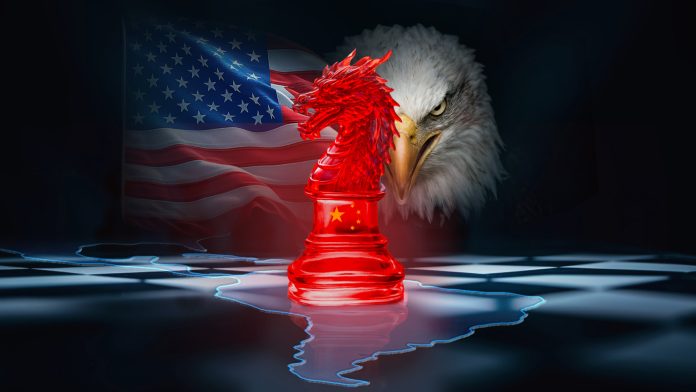
Since Donald Trump was sworn in as president of the United States for the second time a year ago, he has been stirring up controversy. In his inauguration speech, full of controversial statements, he made it clear that he wanted to return to his country’s “golden age,” with defined objectives, one of them in Central America: “China is operating the Panama Canal, but we didn’t give it to China. We gave it to Panama, and we’re going to take it back.”
Washington has not stopped attacking the isthmus, but what seemed like a geopolitical catastrophe started fading away when Panama agreed to allow American troops to conduct combat exercises on its territory, while clarifying that this did not imply a surrender of sovereignty. That solution calmed the waters, at least for now, and managed to ease tensions.
But President Trump, with his erratic stances, does not allow for calm scenarios. He proved this emphatically in the military operation of January 3 in Caracas. Elsewhere in the region, Mexico, Colombia, and Cuba have also been on the radar of his threats, and so the question seems obvious: how many will he carry out?
Con ayuda de última tecnología, Noticias Caracol reconstruyó minuto a minuto cómo se desarrolló la operación militar, sin precedentes en la historia reciente, que permitió la captura de Nicolás Maduro.
Más en https://t.co/yqNEZK7ZOB pic.twitter.com/zyyxtJRH7W
— Noticias Caracol (@NoticiasCaracol) January 13, 2026
Beyond that, the truth is that the world order as we know it has been dismantled, and today, while the United States reaffirms its colonialist position, China promotes its discourse of state sovereignty. If this trend continues, it could lead to a dangerous confrontation.
In this regard, Parsifal D’Sola, director of the Andrés Bello Foundation and the Chinese-Latin American Research Center, believes that Washington has shifted its strategy toward more unilateral actions, but that “does not mean that its power and position have diminished elsewhere, just as China is not giving up ground in Latin America.”
In addition, the expert believes that “military action in Venezuela is a clear sign of how far the United States is willing to go to assert its strategic interests, and this will obviously lead to a new risk analysis calculation by Beijing and all Latin American capitals (…) There has been a rather cheap or easy ambiguity that countries have been playing for many years by not taking positions. But after January 3, that is going to start to have costs.”
How Much Power Does China Have in Latin America?
Latin America is Beijing’s main investment destination outside of Asia. According to China’s General Administration of Customs, between January and November 2025, China’s exports to the region rose 9.3% compared to 2024.
Cómo logró China el mayor superávit comercial de su historia a pesar de la guerra de aranceles de Trump https://t.co/iO28hntKOh
— BBC News Mundo (@bbcmundo) January 14, 2026
Despite the complex scenario, largely defined by Trump’s tariff policy, China has come out with flying colors even with the largest trade surplus in its history last year. Today, it is Latin America’s second largest trading partner after the United States and has strived to consolidate its presence in the region with strategies such as the Silk Road or Belt and Road Initiative (BRI), a global cooperation network that includes differentiated agreements by country in various areas.
As months have passed, the dispute between the two powers in the region has become increasingly evident. Panama, one of the first to join the Chinese trade initiative, did not resist diplomatic pressure from the United States and announced it was officially withdrawing from the initiative in February 2025.
El canal de Panamá, la bisagra americana que quiere Trump
✍️ Alberto Rojas https://t.co/9c8BOcTibT
— EL MUNDO (@elmundoes) January 12, 2026
Peru has also become a scene of confrontation due to the launch of the Chancay mega port. This is a key project for the connection between South America and Asia-Pacific, developed by the Chinese state-owned Cosco Shipping Ports with Peruvian partners and an investment of $3.5 billion.
According to the European Parliament’s Center for Studies, the growing presence of the Asian giant in the region is part of a “deliberate long-term strategy focused on securing access to natural resources, expanding markets for its manufactured goods, and consolidating its economic and political presence.” In addition, estimates indicate that trade between China and Latin America could exceed $700 billion by 2035. The Asian country has established strategic partnerships with Brazil, Mexico, Peru, and Chile in areas such as vehicles, rail and road projects, mining, and the exploitation of natural resources such as lithium.
🗺️China es el primer socio comercial de América Latina y el Caribe, con un 20% de todo su comercio.
Desde 2005, China también ha invertido 250.000 millones de dólares y ha concedido préstamos por un valor de otros 123.000 millones en la región.
¿Crees que China mantendrá su… pic.twitter.com/rlQagTS20v
— El Orden Mundial (@elOrdenMundial) January 20, 2026
In the case of Venezuela, the trade relationship provided an economic lifeline for Caracas in the face of restrictions from Western markets. But Beijing limited itself to describing the capture of Nicolás Maduro as “hegemonic behavior” on the part of Washington.
In fact, as D’Sola says, that bilateral relationship with Caracas was already deteriorating. “This is largely because the Maduro government squandered much of the money that was lent and that should have gone, on the one hand, to investments in oil, but also to road and social infrastructure. The last loan China granted was in 2016.”
This new hemispheric reality suggests that bilateral relations will be more pragmatic than exclusive, and Argentina is a good example. President Javier Milei, known for his closeness to and admiration for Trump, made it clear that his country’s trade ties between his country and China will remain intact, which is logical since the Asian power is its main trading partner.
According to Peruvian historian and writer Rodrigo Murillo, China invests and manages many resources on the continent, and the United States cannot deny that. “Depending on who succeeds President Trump, the policies of Latin American countries could change. Will we have an aggressive United States trying to regain its dominance or a more conciliatory one that loses ground? Today, it is difficult to predict.”
Global Chaos
The America First rhetoric of his early speeches led people to believe that Trump would focus on his country’s internal problems. But far from it, his decisions have caused real chaos in the region, highlighting global fragility and, of course, geopolitical tensions.
By meddling in Venezuela, the mogul moved from rhetoric to reality, which is why his threats to annex Greenland, the autonomous Arctic territory governed by Denmark, resonate even more strongly. Trump seems determined to give free rein to his expansionist aspirations, regardless of the cost. So much so that he did not hesitate to assure the Prime Minister of Norway that now that his country has denied him the Nobel Peace Prize, he no longer cares so much about peace. He concluded: “The world is not secure unless we have complete and total control of Greenland. Thank you! President DJT.”
As for the third major world power at the moment, Russia, its presence in Latin America has been strongly affected by the capture of its main ally, Nicolás Maduro, which not only affects Venezuela but also Cuba. For D’Sola, “Russia does not exert significant economic influence, or at least nothing comparable to China, the United States, or the European Union. And given the current context of the war in Ukraine, its interest and focus are much more centered on Europe.“
Murillo confirms this and asserts that ”if this power manages to find a sovereign place alongside China as an equal, the pair could exert a more respectable counterweight to the United States. Not on its own.”
In the midst of the Davos Economic Forum, and true to Trump’s style, he surprised everyone with a new controversy by publishing two AI-generated montages referring to the conquest of Greenland and Canada. Washington maintains that if it does not take the step towards annexation, Russia and China will establish their hegemony in the Arctic.
🇺🇸🇬🇱 | Trump dice que “el mundo no está seguro” a menos que EE.UU. controle Groenlandia. pic.twitter.com/5U2qY0CJJy
— Visegrád24 (ES) (@visegrad24es) January 20, 2026
In response to this attitude, the European Commission’s President Ursula von der Leyen countered forcefully: “We consider the American people not only our allies, but also our friends. Sinking into a downward spiral will only help the adversaries that we are both determined to keep out of the strategic picture. So our response will be firm, united, and proportionate.”
French President Macron:
We need more Chinese direct investment in Europe in some key sectors. pic.twitter.com/JwMpYpaMun
— Clash Report (@clashreport) January 20, 2026
In a scenario such as this, in which the US president is threatening his most traditional allies on both sides of the Atlantic, Europe has taken a step further by strengthening its ties with China. This was expressed by French President Emmanuel Macron when he welcomed Beijing to the Old Continent.
Within hours, the unity shown by EU and NATO members in the face of threats seemed to pay off when Trump backtracked on his claims that he would acquire Greenland by any means necessary. Is this the only way to neutralize Washington’s hegemonic power? Should Latin America look at itself in this mirror?